India's Iran imports rise to 276,800 bpd vs 195,600 bpd in 2013.

The group plans Rs 30,000-cr oil refinery with IOC; buys Lanco's Udupi power plant for Rs 6,000 cr

India is the 4th largest oil consumer after the US, China and Japan.
If IOC is not allowed to run its own affairs, then we can see it close down in the next 10 to 15 years, warns Sudhir Bisht.
Though the NDA government had been trying to privatise 20 companies, a decision for which was taken in 2017, and included national carrier Air India, the investor community evinced little enthusiasm for any of them. Now, with an in-principle approval for privatisation of BPCL, CCI and SCI, the government has taken the plunge again.

Barring fertiliser, all seven sectors - coal, crude oil, natural gas, refinery products, steel, cement, and electricity - had recorded negative growth in May.

The alarm raised at the naval base turned out to be a hoax after nothing was found.

Reliance Industries on Friday reported a 4.5 per cent drop in its December quarter net profit at Rs 5,256 crore (Rs 52.56 billion).
India's largest oil firm IOC will build the nation's first 'green hydrogen' plant at its Mathura refinery, as it aims to prepare for a future catering to the growing demand for both oil and cleaner forms of energy. Indian Oil Corporation (IOC) has drawn a strategic growth path that aims to maintain focus on its core refining and fuel marketing businesses while making bigger inroads into petrochemicals, hydrogen and electric mobility over the next 10 years, its chairman Shrikant Madhav Vaidya said. The company will not set captive power plants at all its future refinery and petrochemical expansion projects and instead use the 250 MW of electricity it produces from renewable sources like solar power, he told PTI in an interview.

India's plan to produce ethanol from second-generation (2G) sources -- mainly farm waste -- is taking time to materialise even as the government is set to dedicate to the nation on Wednesday a Rs 900-crore plant set up by Indian Oil Corporation (IOC) in Panipat. Though state-run oil companies had decided to set up at least 12 plants in 2016-17 with an investment of around Rs 10,000 crore, this will be the first unit coming on track while others are stuck in various stages owing to issues like capital expenditure, lack of feedstock, and high rates of finished products compared to traditional ethanol units. According to industry sources, three more second-generation plants are coming up.

India plans to further cut imports from Iran by 13 per cent next fiscal even though easing of US and western sanctions has made buying crude oil from the Persian Gulf nation easier.

Barring fertiliser, all seven sectors -- coal, crude oil, natural gas, refinery products, steel, cement and electricity -- recorded negative growth in July.

The FinMin will pay Rs 5,324 crore (Rs 53.24 billion) for Jan-March.

Prices of petrol were reduced 32 times and increased 21 times while diesel prices were slashed 19 times and raised 28 times since 2013.

Officials from India's biggest private refiner recently visited Iran to chalk out the details for resumption of trade ties with Tehran.
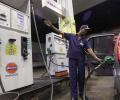
Six non-BJP ruled states -- West Bengal, Tamil Nadu, Andhra Pradesh, Telengana, Kerala and Jharkhand -- have not reduced the VAT on petroleum products, leading to higher prices of petrol and diesel there, Petroleum Minister Hardeep Singh Puri said on Thursday. Puri said in Lok Sabha that the central government has reduced excise duty on petroleum products and some other states, following cues, reduced their Value Added Tax (VAT). Six states -- West Bengal, Tamil Nadu, Andhra Pradesh, Telengana, Kerala and Jharkhand -- have not reduced the VAT, he said amidst vocal protests by the opposition members.

India has rejected a request from BP Plc to be allowed to sell jet fuel to the booming aviation market.
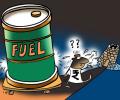
Given that India will get a huge part of its oil supplies from Iran through its government-owned oil PSUs, any unwelcome shocks in global crude rates could be absorbed well enough.

Benchmark BSE Sensex rallied nearly 630 points while Nifty closed above the 16,500 mark on Wednesday after sharp gains in IT and energy shares amid positive global market trends. Buying in index majors Reliance Industries, Infosys and Tata Consultancy Services and FII inflows bolstered the sentiment. Shares of firms related to oil exploration and refineries were in heavy demand, with Reliance Industries rallying 2.47 per cent and ONGC by 4 per cent, as the government slashed windfall tax on petrol, diesel, jet fuel and crude oil.

Saudis are interested in expanding their relationship with India, given it is becoming the main driver of crude demand growth in Asia

Saudi Arabia's deep pockets and a strong financial system could help the country to ride out a low-price environment in order to protect its market share.

In 2012, India attracted $22.78 billion of FDI, according to the data by Department of Industrial Policy and Promotion.

Reliance Industries Ltd on Friday said it was not looking for extension of the marketing deal with public sector oil companies to lift production from Jamnagar refinery.
After steep correction in valuations, these have turned attractive but upside will depend on diesel price rises and export-parity pricing.
Towards the close of 2013, the finance ministry approved the proposal of UK-based Tesco to invest $110 million in opening up of multi-brand retail stores in the country in partnership with Tata Group firm Trent.
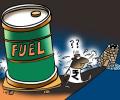
India's climate change goals are turning combustible. On the one hand, a protracted dispute between the government and manufacturers over subsidies threatens to slow the pace of electric vehicle (EV) sales. On the other hand, repeated assertions by different arms of the government over banning sales of new fossil fuel-fired vehicles have queered the pitch for energy investments. Before we address the issue of the recommended diesel vehicle ban in the recent report on energy transition, issued months before the next round of global climate talks begin in Dubai in November, let's look at what's at stake.
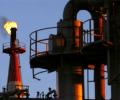
Rising production from OPEC as well as the US also weighing on prices

The output of eight core sectors grew by 16.8 per cent in May, mainly due to a low base effect and uptick in production of natural gas, refinery products, steel, cement and electricity, official data released on Wednesday showed. The eight infrastructure sectors of coal, crude oil, natural gas, refinery products, fertilisers, steel, cement and electricity had contracted by 21.4 per cent in May 2020 due to the lockdown restrictions imposed to control the spread of the COVID-19 infections. In March this year, these key sectors had recorded a growth of 11.4 per cent, and 60.9 per cent in April.

India's macroeconomic fundamentals are strong to deal with global challenges and the central government is committed to sticking to the fiscal deficit target of 6.4 per cent of the GDP for the current fiscal, official sources said on Monday. The government is taking steps to deal with the spiralling crude oil prices in the international market, the sources said. India meets nearly 85 per cent of its oil demand through imports and a weaker rupee makes imports costlier.

Saudi Aramco had right from the beginning resisted the price tag Reliance had put for the 20 per cent stake in O2C business, which comprises the company's twin refineries at Jamnagar in Gujarat, petrochemical plants and 51 per cent in fuel retailing venture.
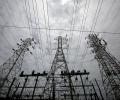
The output of eight core sectors jumped by 56.1 per cent in April mainly due to a low base effect and uptick in production of natural gas, refinery products, steel, cement and electricity, official data released on Monday showed. The eight infrastructure sectors of coal, crude oil, natural gas, refinery products, fertilisers, steel, cement and electricity had contracted by 37.9 per cent in April 2020 due to lockdown restrictions imposed to control the spread of coronavirus infection. In March this year, the eight sectors had recorded a growth rate of 11.4 per cent.

India will pay Iran $900 million in two tranches beginning next week to clear part of the past dues for crude oil it buys from the Persian Gulf nation.
Oil and gas players' wish list includes incentivising E&P investments and reintroduction of income tax holiday for exploration and production activities, among others.

If 4,000 workers could work round the clock for the construction of the new Parliament building, then there is no reason why all infrastructure projects too cannot follow that model, asserts Dr Sudhir Bisht.

India's plans to relax foreign direct investment (FDI) rules across a broad spectrum of industries have received the final approval from the Cabinet Committee of Economic Affairs (CCEA).

Eight core sector industries recorded a growth of 5.5 per cent in February, the highest in 11 months, mainly due to healthy expansion in output of coal, refinery products and electricity, according to a government data released on Tuesday. The eight core sector industries -- coal, crude oil, natural gas, refinery products, fertiliser, steel, cement and electricity -- had expanded by 2.2 per cent in February last year.
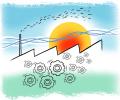
The government on Thursday allowed free inter-state wheeling of renewable energy used in the production of green hydrogen and ammonia as it seeks to boost usage of the carbon-free fuel and make India an export hub. Unveiling the first part of the much-awaited National Hydrogen Policy, Power and New and Renewable Energy Minister Raj Kumar Singh said the government is targeting production of 5 million tonnes of green hydrogen by 2030. Oil refineries to steel plants require hydrogen to produce finished products.

Attractive pricing coupled with improving prospects make the offer lucrative

The output of eight core sectors grew 8.9 per cent in June, mainly due to a low base effect and uptick in production of natural gas, steel, coal and electricity, official data showed on Friday. The eight infrastructure sectors of coal, crude oil, natural gas, refinery products, fertilisers, steel, cement and electricity had contracted by 12.4 per cent in June 2020 due to the lockdown restrictions imposed to control the spread of coronavirus infections. In May this year, these key sectors had recorded a growth of 16.3 per cent, while it was 60.9 per cent in April.

With the Petroleum Ministry opposing disinvestment of IOC in the market, government is exploring the option of selling its shares to other oil PSUs like ONGC and OIL.
